Table of Contents
For years, digital accessibility has existed in a gray area for many organizations. While the Americans with Disabilities Act has been law since 1990, specific technical requirements for digital content remained frustratingly vague. That era is officially over.
The Department of Justice’s April 2024 final rule under ADA Title II established clear, enforceable standards for digital accessibility—and the compliance deadlines are approaching quickly. Organizations that haven’t prioritized PDF accessibility are running out of time.
Revised editor’s note (updated October 10, 2026): The Department of Justice issued an Interim Final Rule on April 20, 2026, extending both ADA Title II compliance deadlines by one year. The original deadlines were April 24, 2026, for state and local governments serving populations of 50,000 or more, and April 26, 2027, for smaller entities and special district governments. The revised deadlines are April 26, 2027, and April 26, 2028, respectively. The Department of Health and Human Services followed on May 7, 2026, with a matching one-year extension of its Section 504 web accessibility rule.
Neither extension changed what is required: WCAG 2.1 Level AA remains the technical standard, and Title II’s longstanding accessibility obligations still apply. The public comment period on the DOJ rule closed on June 22, 2026. Both agencies have said they may propose changes to the substance of their 2024 rules during the extension period, and the National Federation of the Blind has filed a federal lawsuit challenging both extensions. Because these dates could still move in either direction, organizations that have begun remediation should keep going—proactive compliance continues to reduce litigation risk.
The Deadlines You Need to Know
The DOJ’s final rule sets firm compliance dates based on population size:
April 26, 2027: State and local governments serving populations of 50,000 or more must ensure all web content and mobile applications—including PDF documents—meet WCAG 2.1 Level AA standards.
April 26, 2028: Smaller entities serving populations under 50,000, along with special district governments, face the same requirements one year later.
Healthcare and social service organizations face a parallel set of deadlines. The Department of Health and Human Services adopted the same WCAG 2.1 Level AA standard under Section 504 of the Rehabilitation Act for anyone receiving HHS funding, including providers that accept Medicare or Medicaid. After its own one-year extension, recipients with fifteen or more employees must comply by May 11, 2027, and recipients with fewer than fifteen employees by May 10, 2028.
These aren’t suggestions or guidelines—they’re legal mandates with real consequences.
Why PDFs Are the Hidden Compliance Risk
When organizations think about digital accessibility, websites typically come to mind first. But PDFs represent one of the most significant—and often overlooked—compliance vulnerabilities.
Consider the scope: government agencies routinely publish meeting minutes, budget documents, permit applications, public notices, and countless other records as PDFs. Educational institutions distribute course materials, financial aid forms, and transcripts in PDF format. Healthcare organizations share patient forms, policy documents, and informational materials as PDFs.
The challenge is that simply having a PDF available online doesn’t make it accessible. Without proper structure—tagged content, logical reading order, alternative text for images, and correct metadata—these documents remain inaccessible to the millions of Americans who rely on screen readers and other assistive technologies.

Understanding the Standards
Several overlapping standards govern PDF accessibility, and understanding their relationship is essential:
- WCAG 2.1 AA (Web Content Accessibility Guidelines) is the technical standard the DOJ formally adopted for ADA Title II, and the same version HHS adopted under Section 504. These guidelines ensure digital content is perceivable, operable, understandable, and robust for all users. WCAG 2.2, published in 2023, adds further success criteria; meeting it is a sound best practice and also satisfies 2.1, but 2.1 AA is the legal requirement.
- Section 508 of the Rehabilitation Act applies to federal agencies and the information and communication technology they develop, buy, or use. The revised 2017 standards incorporate WCAG 2.0 AA. Organizations that receive federal funding are covered by Section 504 of the same act, which is the basis for the HHS rule described above.
- PDF/UA (ISO 14289) is the international standard specifically designed for PDF accessibility. It defines the structural, tagging, and metadata requirements that make PDFs work reliably with assistive technologies. The Section 508 standards reference PDF/UA-1 for authoring tools that create PDFs, and a newer version, PDF/UA-2 (ISO 14289-2), was published in 2024 for documents built on PDF 2.0.
- ADA Title III applies to private businesses and nonprofit organizations operating places of public accommodation. While no formal rule exists yet for Title III web accessibility, litigation continues to rise dramatically.
The Litigation Landscape Is Intensifying
Make no mistake: accessibility isn’t just about compliance—it’s about risk management.
Digital accessibility lawsuits rebounded sharply in 2025. Plaintiffs filed 3,117 website accessibility lawsuits in federal court that year, a 27 percent increase over the 2,452 filed in 2024. Including state courts in New York and California, the total topped 5,000. E-commerce websites remained the primary targets, but any organization with a public-facing digital presence faces exposure.
Particularly concerning: in 2025, lawsuits named companies using accessibility overlay widgets more than 1,400 times. These automated tools, often marketed as quick fixes, consistently fail to address underlying accessibility barriers and provide no meaningful legal protection.
The message is clear: there are no shortcuts to genuine accessibility compliance.
What Accessible PDF Remediation Actually Requires
Creating truly accessible PDFs involves several technical requirements that most documents fail to meet out of the box:
- Proper document structure through semantic tagging that identifies headings, paragraphs, lists, and tables in their correct hierarchy.
- Logical reading order that ensures assistive technologies present content in the sequence intended by the author, not simply left-to-right, top-to-bottom.
- Alternative text for all meaningful images that conveys equivalent information to users who cannot see them.
- Accessible tables with properly identified headers and data relationships.
- Document metadata including title, language, and other properties that help assistive technologies interpret the content correctly.
- Bookmarks for navigation in longer documents.
For organizations with extensive document libraries—think years of board minutes, financial reports, policy manuals, and public records—the scope of remediation can seem overwhelming.
Scaling Accessibility with Automated Solutions
The traditional approach to PDF remediation has been manual: skilled accessibility specialists open each document, add tags, verify reading order, write alt text, and validate compliance. While thorough, this method simply doesn’t scale for organizations facing deadlines with thousands of documents in their backlogs.
This is where automated PDF accessibility remediation becomes essential. Modern AI-powered solutions can analyze document geometry, identify structural elements, establish proper reading order, and apply compliant tagging—transforming the remediation process from months of manual work to days of automated processing.
Datamation’s Accessibility on Demand service exemplifies this approach, offering tiered remediation levels that balance compliance requirements with budget realities. Their platform handles both scanned and digital PDFs, generating audit-ready compliance reports validated against WCAG 2.2 AA and PDF/UA standards.
With the first compliance dates now set for spring 2027, the math is straightforward: automated remediation can reduce per-page costs by up to 95 percent compared to manual methods while processing documents at speeds that make deadline compliance actually achievable.
Building a Sustainable Accessibility Program
Meeting the immediate deadline is necessary, but it’s not sufficient. The DOJ rule requires ongoing compliance—new documents must meet accessibility standards from the moment they’re published. Older PDFs posted before the compliance date are generally exempt, but only if they aren’t currently used to apply for, access, or participate in services, programs, or activities. Any document still in active use, such as a current permit application, must be remediated.
This demands a comprehensive approach:
- Document scanning and digitization of legacy paper records should prioritize accessibility from the start. Organizations converting physical archives have an opportunity to build accessibility into their document scanning processes rather than treating it as an afterthought.
- Workflow integration ensures new documents are created accessibly by default. This might involve templates, training, or automated validation tools integrated into existing document management systems.
- Ongoing monitoring identifies accessibility barriers before they become complaints or lawsuits.
- Clear policies establish responsibilities and processes across the organization.
Industries Facing the Greatest Pressure
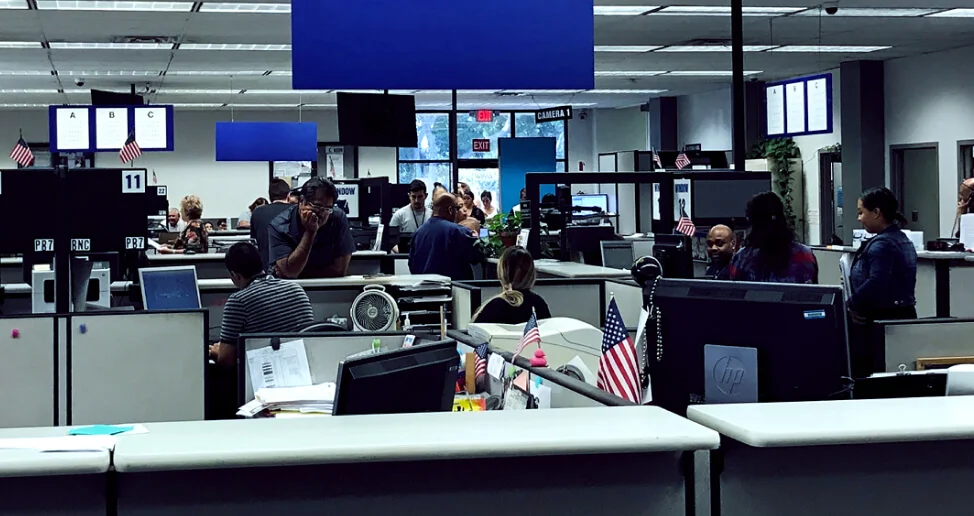
While the ADA Title II rule explicitly targets state and local government entities, the ripple effects extend much further:
- Government agencies at all levels—from municipal websites to county portals to state departments—face the most direct compliance requirements. The rule covers everything from online forms and permit applications to meeting agendas and budget documents.
- School districts and educational institutions must ensure students and families with disabilities can access the same information and services as everyone else. This includes enrollment forms, curriculum materials, board policies, and administrative communications.
- Healthcare organizations that receive HHS funding, including any provider that accepts Medicare or Medicaid, now face their own federal deadline under Section 504: May 11, 2027, for organizations with fifteen or more employees. Patient portals, intake and consent forms, and health education materials are all in scope.
- Financial institutions and other organizations receiving federal financial assistance face Section 504 obligations regardless of how Title III rulemaking unfolds, and private-sector firms remain frequent targets of Title III litigation.
- Any organization serving the public should recognize that accessibility litigation continues expanding, and proactive compliance is far less expensive than reactive defense.
The Cost of Inaction
Organizations that fail to prioritize accessibility face multiple categories of risk:
- Legal exposure including lawsuits, demand letters, settlements, and ongoing legal fees. Repeat litigation is increasingly common: in 2025, 1,427 digital accessibility lawsuits—about 45 percent of federal cases—targeted companies that had already been sued.
- Regulatory penalties as enforcement mechanisms strengthen and deadlines pass.
- Reputational damage as accessibility failures become public and advocacy organizations highlight non-compliant entities.
- Exclusion of customers and constituents representing the more than 70 million American adults living with disabilities—more than one in four—a population that controls over $500 billion in disposable income.
PDF Remediation: Taking Action Now
For organizations yet to begin their accessibility journey, the priority actions are clear:
- Audit your existing document inventory. Understand the scope of PDFs requiring remediation, prioritizing documents actively used for current services, programs, and activities.
- Engage accessibility expertise. Whether through internal training, external consultants, or technology partners, ensure your team understands the requirements and has the tools to meet them.
- Implement scalable remediation. For significant backlogs, automated remediation solutions offer the only realistic path to deadline compliance.
- Establish accessible creation workflows. Stop creating new accessibility debt by building accessible document practices into your standard operations.
- Document your efforts. Maintain records of your accessibility program, including policies, training, remediation activities, and ongoing improvements.
The Opportunity in Accessibility
It’s worth stepping back from compliance pressure to recognize what accessible documents actually accomplish: they ensure that a resident with a visual impairment can independently review a zoning application, that a student using a screen reader can access course materials alongside their peers, that a patient with a disability can understand their healthcare rights without assistance.
Accessibility isn’t just a legal obligation—it’s a fundamental aspect of serving all members of your community equitably.
The organizations that approach this deadline as an opportunity rather than a burden will emerge with more inclusive services, reduced legal risk, and documentation practices that serve everyone better.
The good news is that the path forward is clear. With the right tools and partners, achieving compliance is well within reach—and the benefits extend far beyond avoiding penalties. Organizations that invest in accessibility now will be better positioned to serve their entire community effectively for years to come.
Ready to tackle your PDF accessibility backlog before the deadline? Request a demo of Datamation’s Accessibility on Demand platform to see how automated remediation can help your organization achieve compliance at scale. For organizations also needing to digitize legacy paper records, explore our comprehensive document conversion services to build accessibility into your digital transformation from the start. Not sure where to start? Give us a call at 630-321-0601.